


A forgotten name in Italian design, surviving through objects, labels and unanswered questions
Some design companies leave behind archives, catalogues, biographies and carefully documented histories.
Others survive almost entirely through their objects.
MAM — Metalli Artistici Milano — belongs to the second category.
Vintage trays, coffee services, tableware and decorative objects bearing the MAM name still appear regularly on the market. Some are restrained and unmistakably modernist. Others are ornate, almost historicist. Surviving labels mention Milan, interior objects and highly durable finishes; certain tea and coffee services are repeatedly attributed to a designer identified only as G. Coarezza.
And yet, for a company whose objects appear in such variety, remarkably little accessible documentation seems to have survived.
The mystery of MAM is therefore not whether the company existed.
It clearly did.
The mystery is what kind of company it really was, who designed for it, how large its production was — and why so little of that history remains visible today.
[[product:1]]
What does MAM stand for?
One point can be established with confidence.
MAM stands for Metalli Artistici Milano.
An inventory of the archives of the Centro Ricerche Giuseppe Di Vittorio includes an entry for “Mam – Metalli artistici Milano (1977)”, and elsewhere cross-references Metalli artistici Milano directly to MAM. This gives us an archival trace of the company name in 1977. Cultura
Surviving objects provide further evidence.
Original labels reproduced on vintage examples read:
“MAM inalterabile a 1000/1000”
“MAM oggetti per arredamento”
“Made in Italy”
The wording oggetti per arredamento — objects for interiors or furnishings — is particularly revealing. It suggests a company whose identity may have extended beyond conventional tableware into the broader field of decorative objects for the home. Vintage Shop
That description fits the range of surviving pieces surprisingly well.
One brand, several very different aesthetics
Looking at MAM objects today can be confusing because they do not all appear to belong to the same design language.
Some pieces are starkly modern.
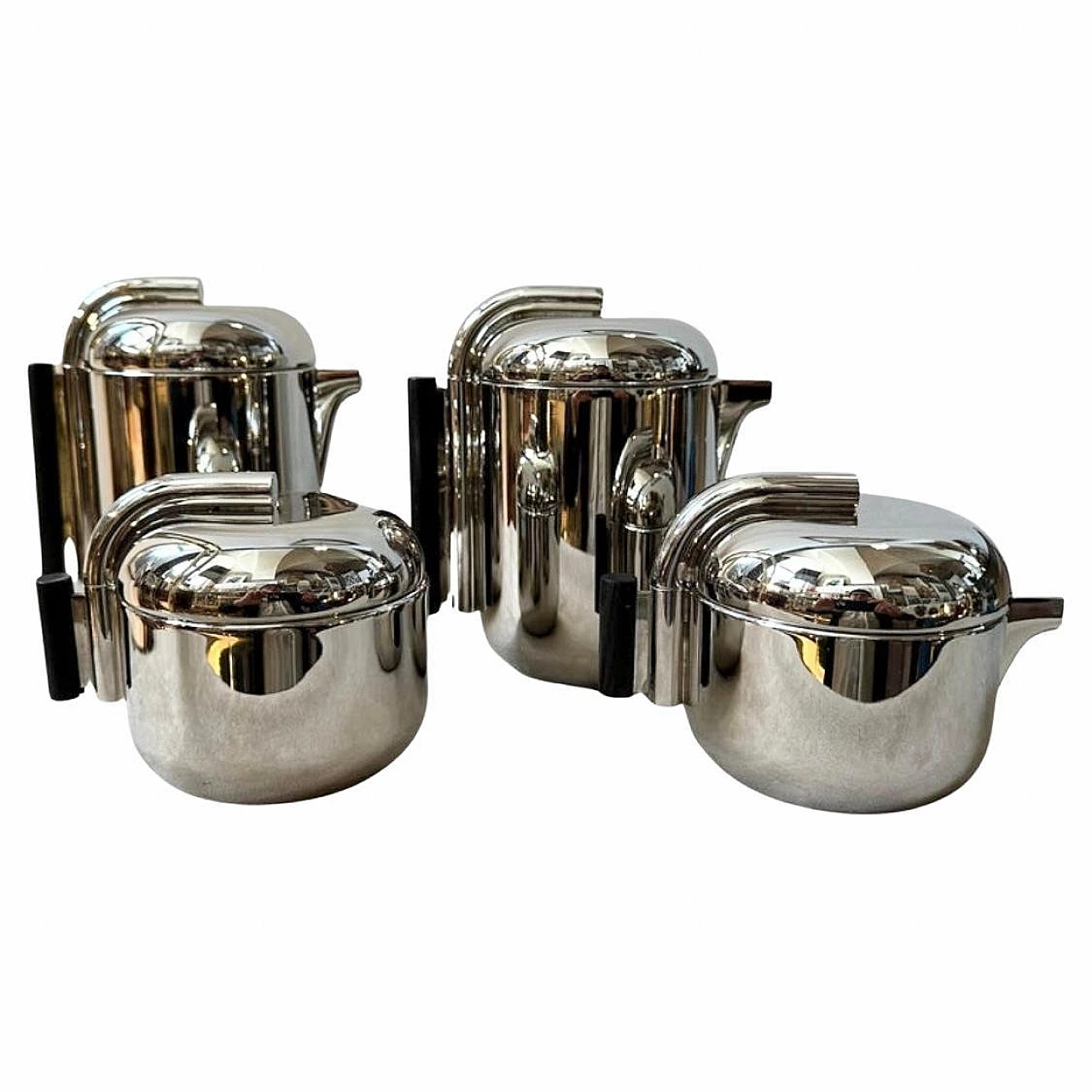
Large rectangular trays use polished metal and almost no ornament. Tea and coffee sets attributed to the 1960s feature geometric bodies, mirror-like surfaces and contrasting handles — objects that belong comfortably within the world of post-war Italian modernism. IntOndo
But other MAM pieces are completely different.
An auctioned MAM Milano coffee service was described as Empire style, richly embossed, with a zoomorphic spout and much more traditional decoration. The set carried the manufacturer's MAM mark and was dated broadly between 1950 and 1974. ArsValue.com
This variety raises an interesting question.
Was MAM a tightly controlled design brand with a recognisable house style?
Or was it closer to a manufacturer and editor of metal objects, producing collections for different markets, styles and designers?
At present, the surviving evidence seems much better suited to the second possibility — but without a company catalogue or archive, it remains a hypothesis rather than a documented conclusion.
And this is where MAM becomes particularly fascinating.
“Inalterabile a 1000/1000”: what does it actually mean?
One of the markings most frequently associated with MAM is:
INALTERABILE A 1000/1000
At first sight, a number expressed in thousandths can look like a precious-metal fineness mark.
But the surviving objects themselves warn against that interpretation.
A MAM tray carrying the wording is described as stainless steel, while an auction-house catalogue uses the same inalterabile 1000/1000 wording for a silver-plated steel MAM coffee service. Vintage Shop
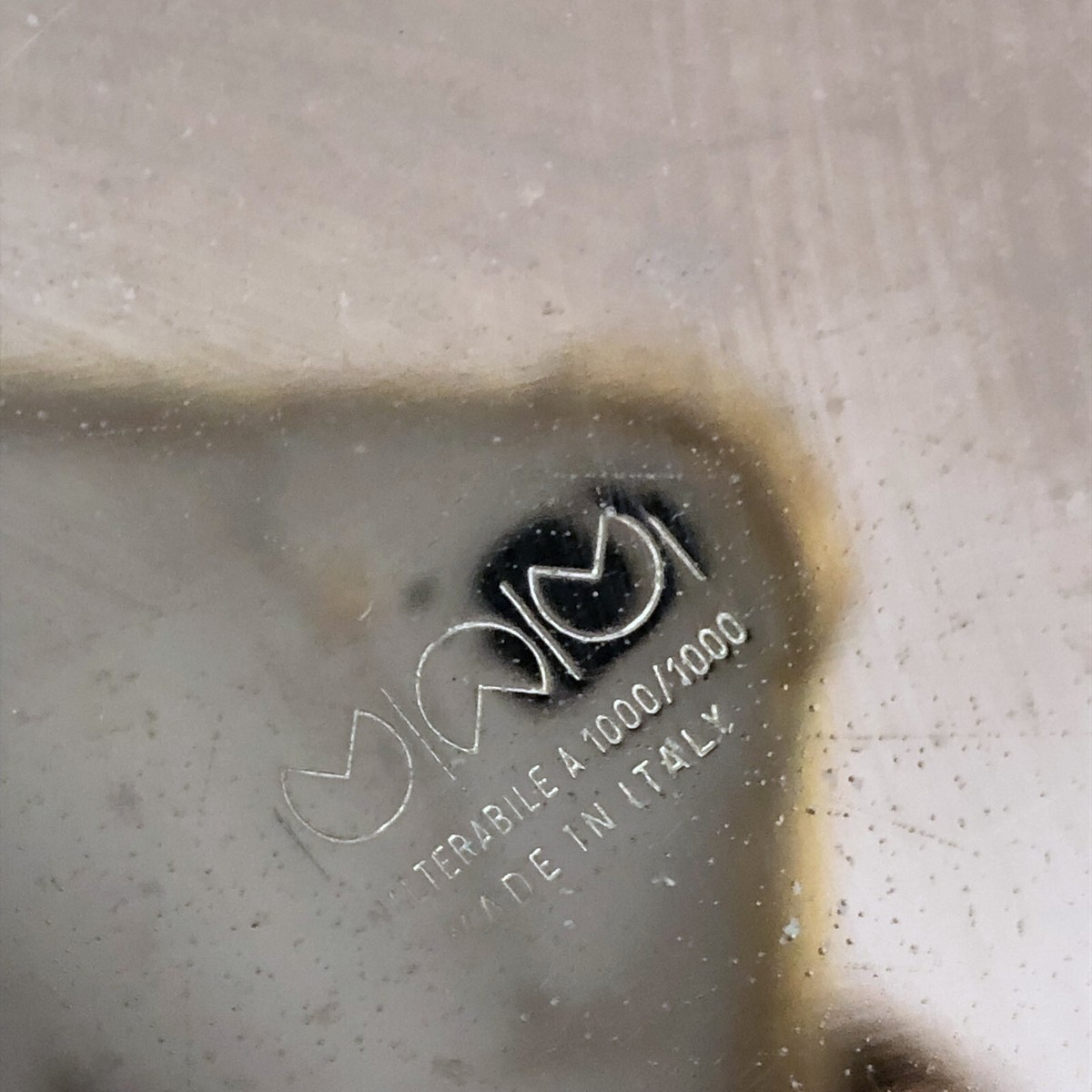

So the inscription should not simply be read as “1000/1000 silver.”
It appears instead to be associated with MAM's claim of an unalterable or resistant surface finish.
Exactly how MAM defined the wording commercially — and whether it referred to a particular process — is one of the areas where surviving primary documentation would be especially valuable.
A number on an object is not necessarily a precious-metal hallmark.
Again, the object and the documentation have to agree.
Silver, gold and palladium
MAM also appears to have experimented with several metallic finishes.
Silver-coloured pieces are common, including both stainless-steel and silver-plated objects in surviving descriptions. Vintage Shop
Other examples associated with the modernist tea and coffee services carry more unusual finishes.
A surviving set attributed to G. Coarezza is marked “PALLADIUM PLATE – MADE IN ITALY,” combining bright bodies with contrasting tubular handles. Subito

[[product:1]]
Other market examples of the same family are described with 24K gold-plated details or oro zecchino finishes.
Taken together, these objects suggest a company particularly interested in surface, reflection and metallic contrast — qualities very much at home in Italian interiors of the 1960s and 1970s.
But even here, the surviving record remains fragmented.
MAM and its designers
One of the most intriguing aspects of MAM is that the company does not appear to have been tied to a single designer.
Several names recur across surviving objects.
G. Coarezza is repeatedly associated with MAM’s modernist tea and coffee services, particularly the polished metal sets with contrasting handles and luxury finishes.
But other collaborations have also surfaced.
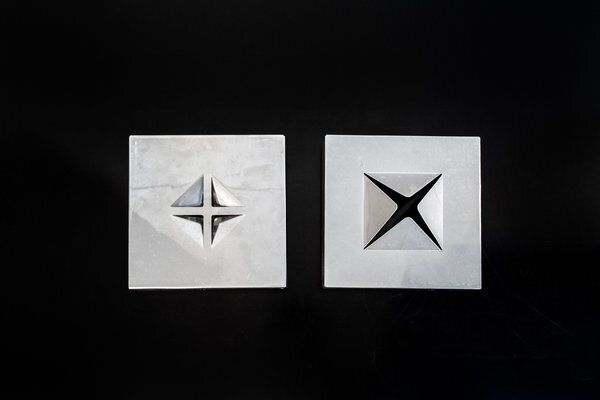
Objects attributed to Ugolini Calegari include 1970s storage boxes combining plastic bodies with chromed steel lids, manufactured by MAM Metalli Artistici Milano. Vinterior
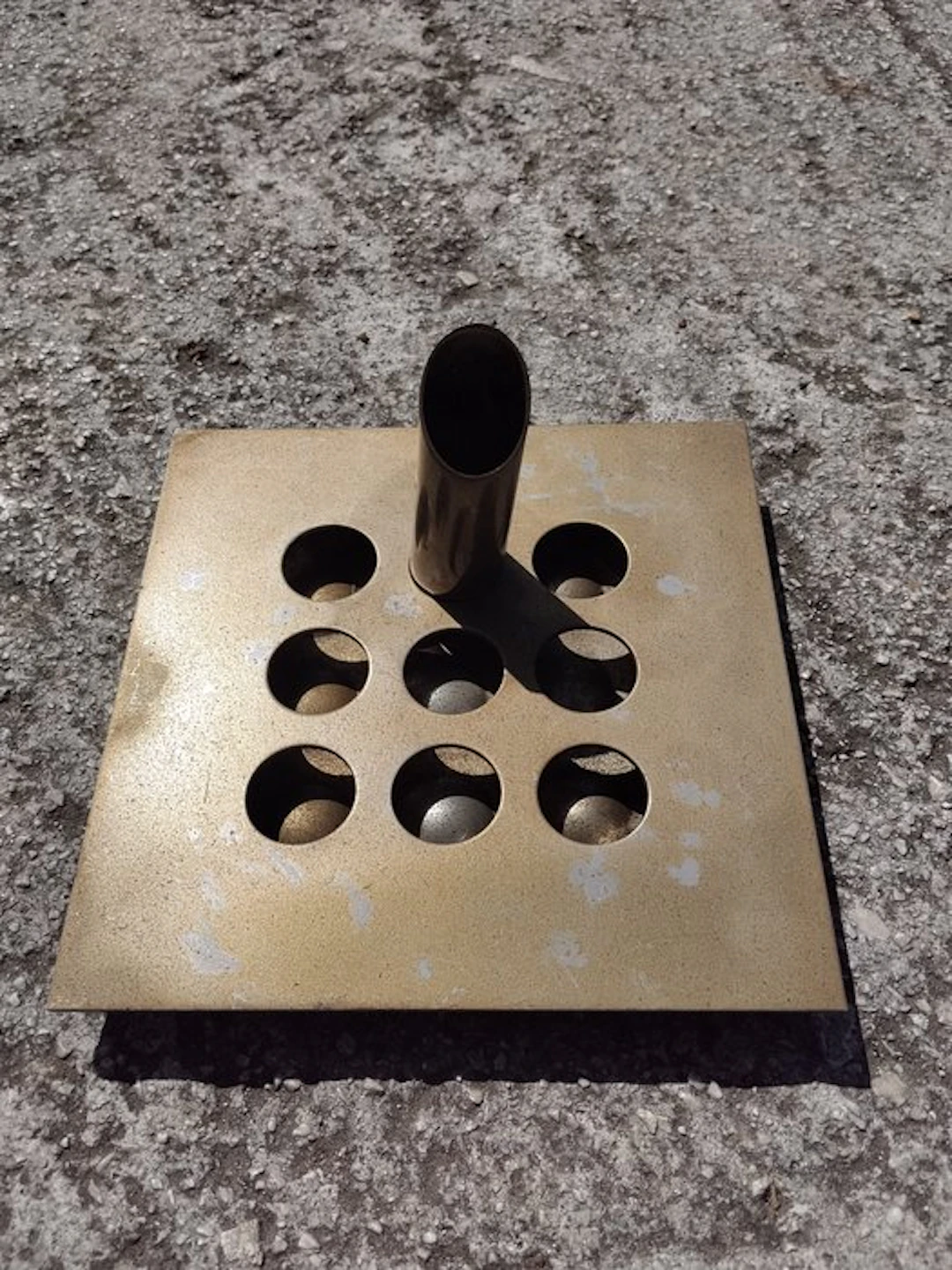
A sculptural stainless-steel flower holder from the same decade is attributed to Mario Faggian for MAM, showing a very different side of the company’s production — closer to Space Age and programmed or kinetic design than traditional tableware. Barnebys
These surviving objects suggest that MAM may have functioned not simply as a manufacturer with one fixed aesthetic, but as a producer capable of working with different designers and different design languages.
That possibility would also help explain the remarkable diversity of objects carrying the MAM name.
What remains difficult is determining the exact nature of those relationships.
Were these designers external collaborators? Employees? Independent designers whose models were produced under licence? Did MAM commission complete collections or individual objects?
Without surviving catalogues or company records, those questions remain open.
MAM was not one designer and not one style. It appears to have been a platform for several voices in post-war Italian design.
[[collection:1]]
The G. Coarezza question
And then there is G. Coarezza.
This name appears repeatedly in connection with MAM's modernist tea and coffee services.
IntOndo archives a 1960s silver-plated tea and coffee service as designed by G. Coarezza for MAM Milano, with polished geometric bodies and contrasting dark handles. IntOndo
The attribution also appears repeatedly in later market listings for related MAM services. eBay
So the association is not based on one isolated seller.
It has clearly circulated for some time.
What is much harder to find is G. Coarezza himself.
At least one surviving period package for a MAM teapot explicitly bears the wording “DESIGN G. COAREZZA,” providing direct documentary evidence for Coarezza’s authorship of this model.

Was Coarezza an independent designer commissioned by the company?
An employee?
A partner?
A designer whose full identity has simply fallen out of the historical record?
For now, the objects seem to preserve his name more successfully than the archives do.
Was MAM a manufacturer, a design editor — or both?
The surviving evidence raises an even broader question.
What exactly was MAM's role?
The company's own surviving wording — “Metalli Artistici Milano” and “oggetti per arredamento” — sounds broader than the identity of a specialist silversmith.
The diversity of surviving objects supports this.
We find serving trays, coffee services and decorative table objects in both modernist and traditional styles. Vintage Shop
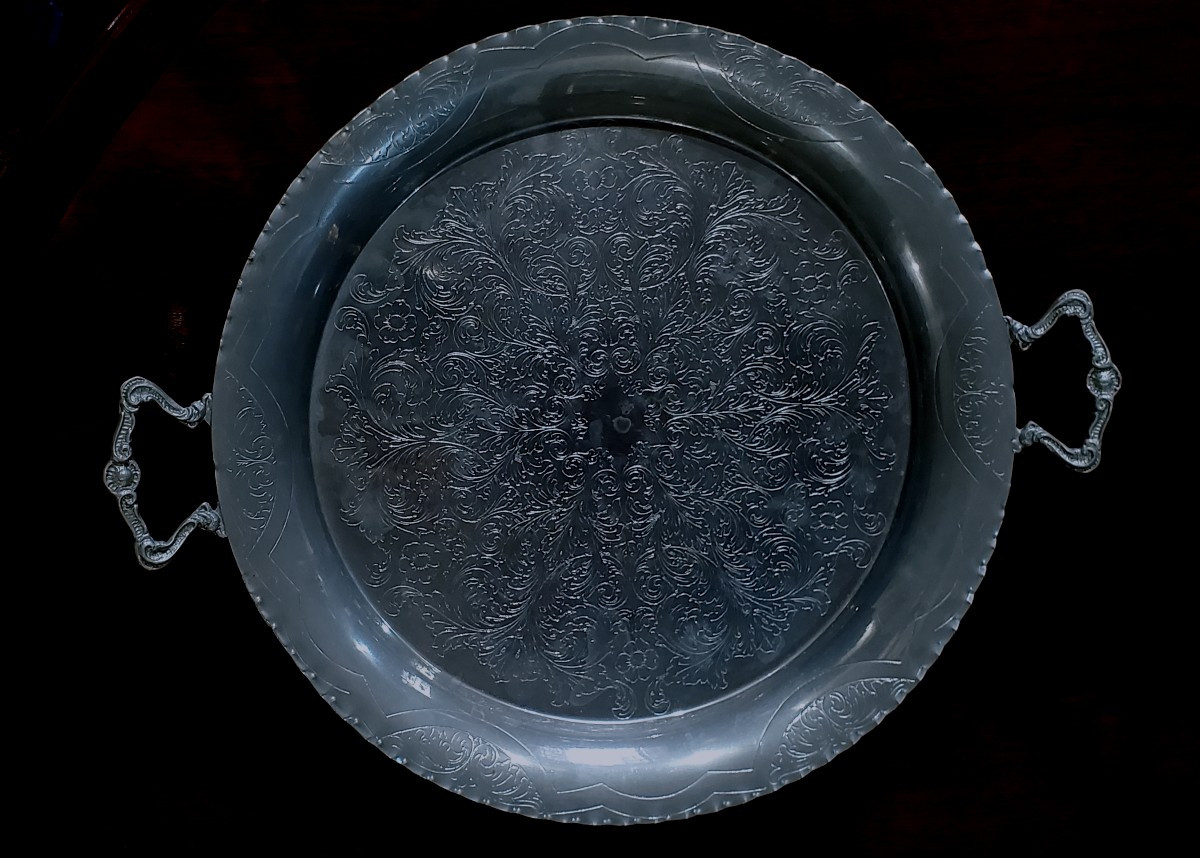
That leaves open several possibilities.
MAM may have designed and manufactured its own collections.
It may have commissioned outside designers.
It may have acted partly as an editor — selecting designs and producing them under the MAM brand.
Or its business model may have changed over time.
Without period catalogues or company records, the precise answer remains unclear.
And that uncertainty should not be filled with a famous designer's name simply because the objects look “Italian design.”
Sometimes the gap in the archive is itself part of the object's history.
What happened to MAM?
This may be the largest unanswered question.
The archival record confirms Metalli Artistici Milano in 1977. Surviving objects are generally associated with the post-war decades, particularly the 1960s and 1970s. Cultura

But the company's later history is much less obvious.
So far, we have not found strong documentary evidence establishing a well-known acquisition, merger or continuation under one of the major Italian design names with which MAM objects are sometimes stylistically compared.
The company seems instead to fade from the easily accessible design record.
That disappearance is striking because the objects did not disappear with it.
They survived in homes.
Their labels survived.
Their marks survived.
And decades later, the objects are effectively reconstructing the history of their maker in reverse.
A MAM piece at Les Trois Curieuses
Our own MAM Milano set is part of exactly this puzzle.
Its polished cylindrical forms and contrasting gold-toned tubular details place it within the modernist side of MAM's production.
The surviving 24K-related marking links it to the luxurious metallic finishes found on comparable MAM services, while closely related models are repeatedly attributed on the vintage design market to G. Coarezza.
For that reason, the set is interesting to us for more than its appearance.
It represents a manufacturer we can name, a design attribution that appears repeatedly — and a history that is still incomplete.
Rather than hiding those uncertainties, they are part of what makes the object worth studying.
[[product:1]]
When objects outlive their archives
There is a tendency in twentieth-century design to focus on companies whose histories are already neatly documented.
But that produces a distorted picture.
For every Alessi, Kartell or Artemide with a highly visible historical record, there were other manufacturers whose objects circulated widely but whose archives did not become part of the standard design canon.
MAM appears to be one of those names.
We know Metalli Artistici Milano existed.
We know what some of its labels said.
We can document a surprisingly varied body of surviving production.
We repeatedly encounter the name G. Coarezza.
What we cannot yet reconstruct with the same certainty is the complete company history connecting all those pieces together.
And perhaps that is why MAM deserves attention.
Not because every mystery needs to be turned into a confident attribution — but because some objects remind us how much design history is still waiting to be reconstructed.
The absence of an archive does not mean the absence of a history.
[[collection:2]]


